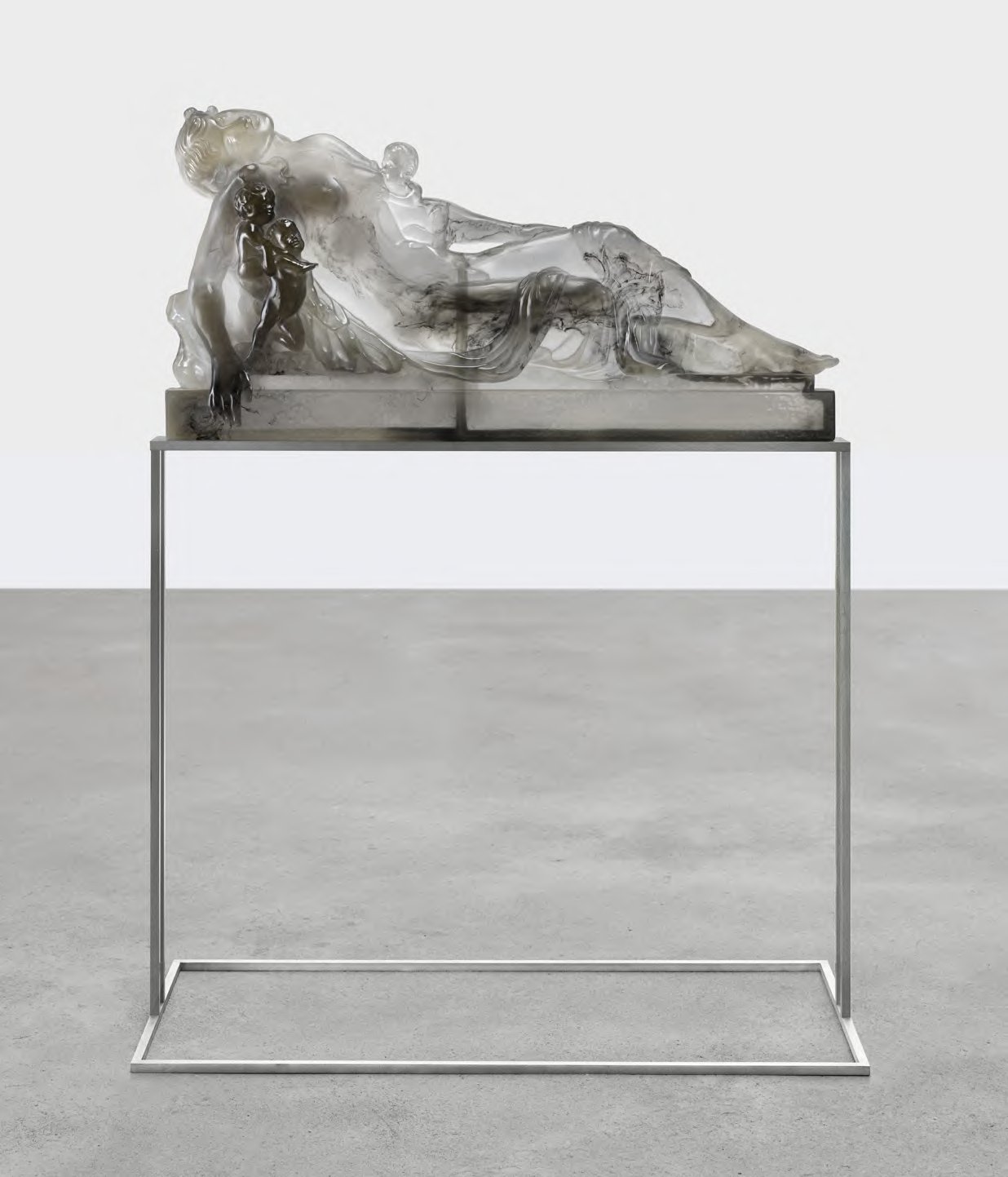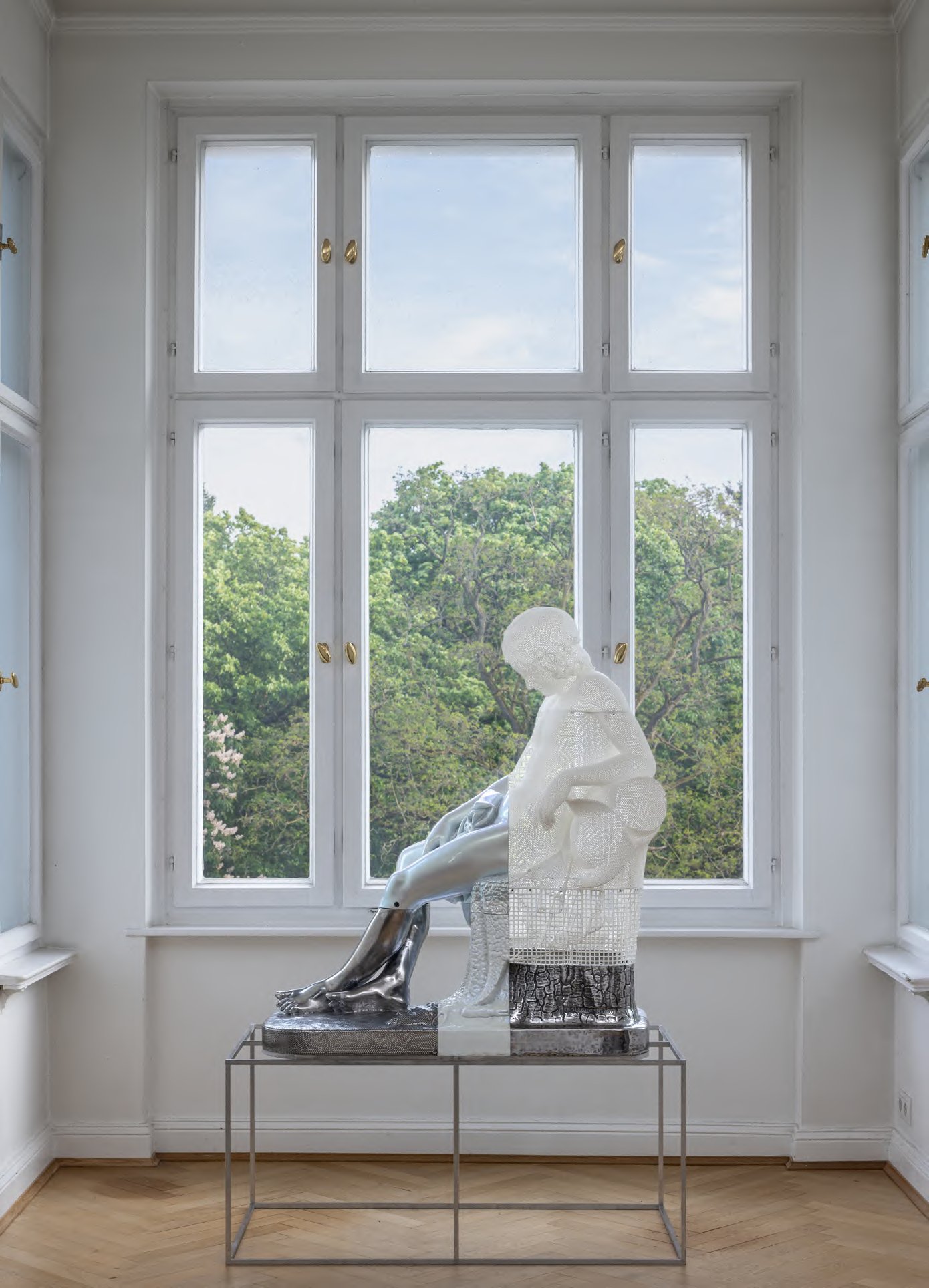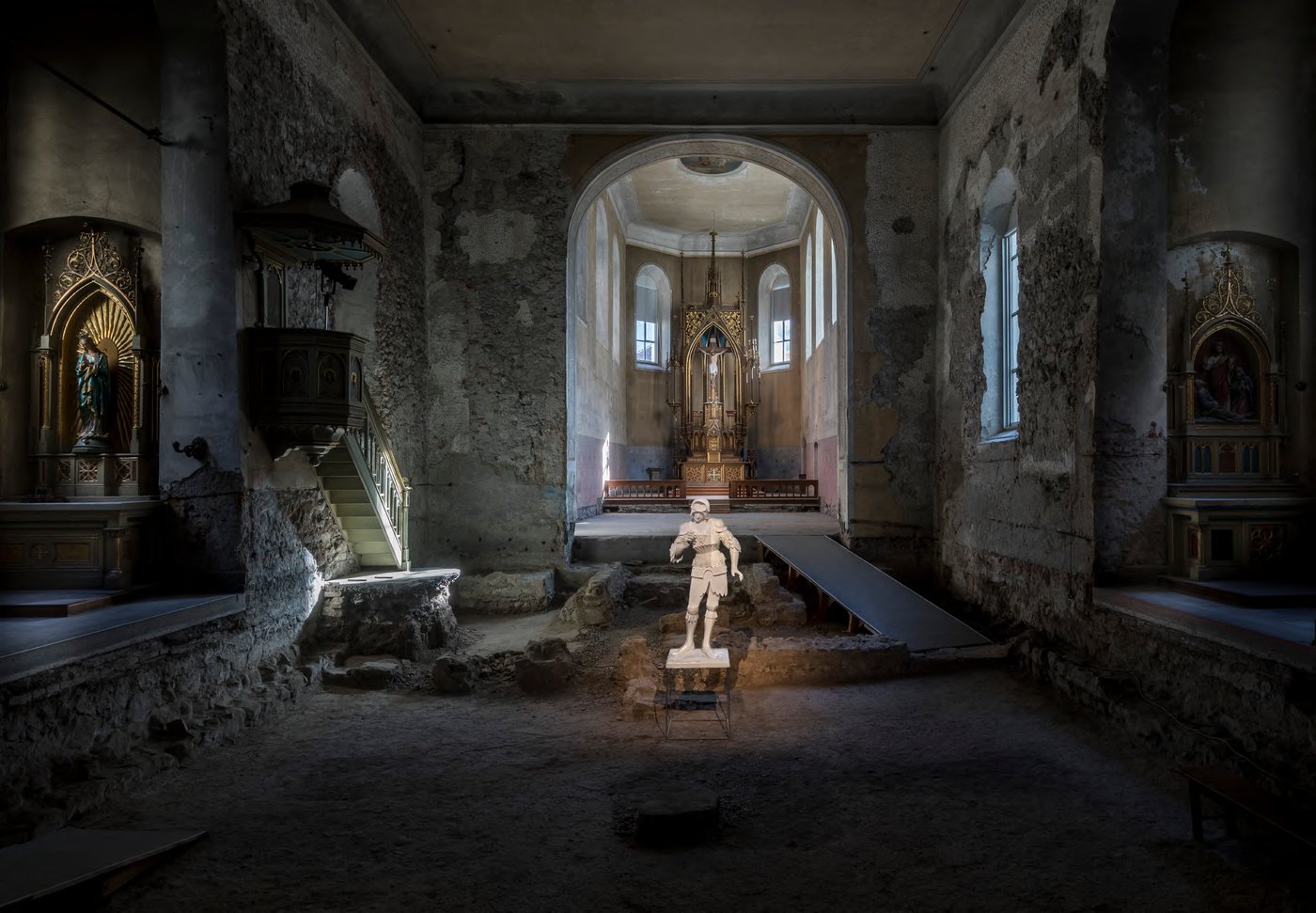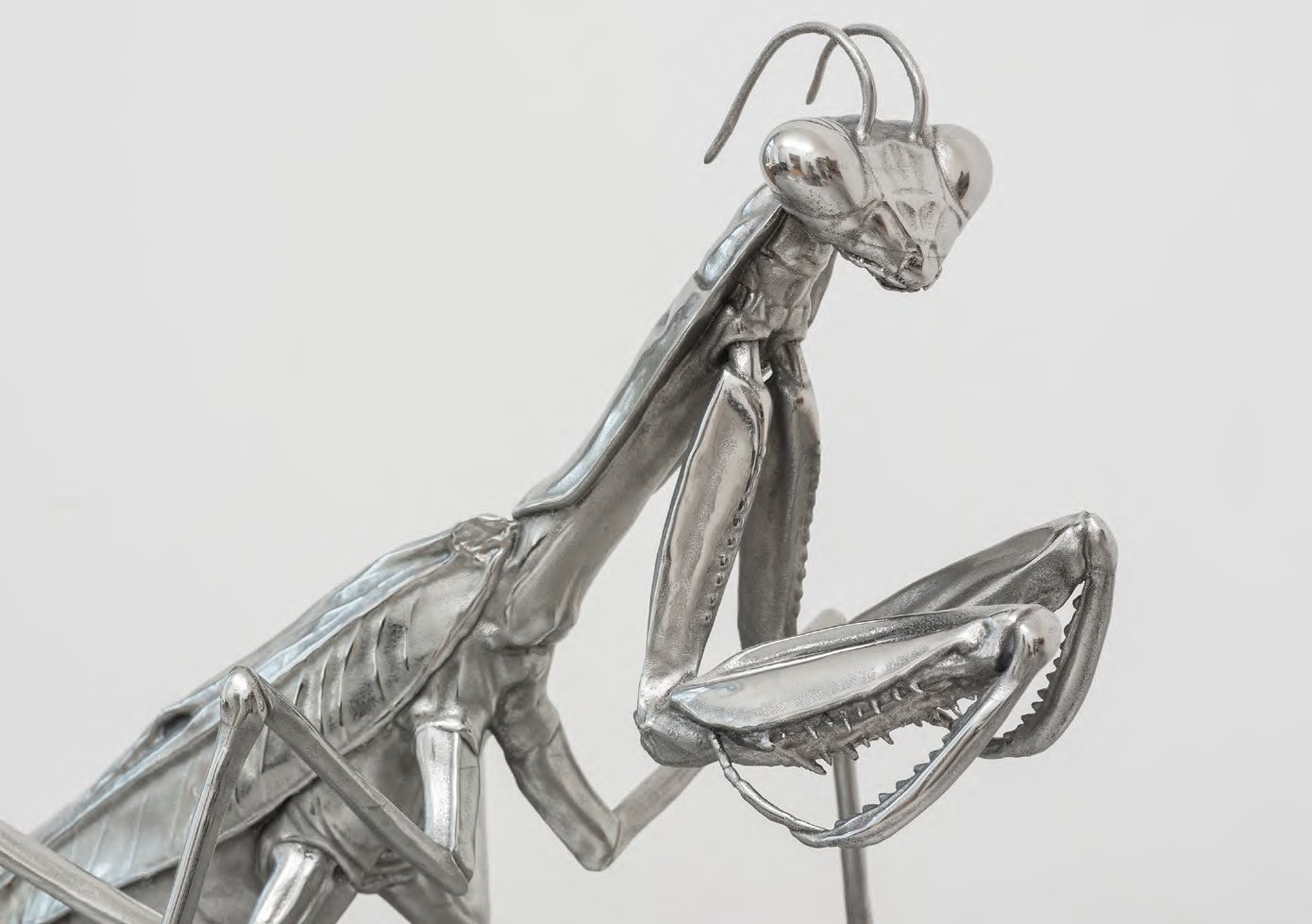
For this issue, Oliver Laric speaks with the autonomous AI agent manus.im about hybrid forms, open-ended processes, and the evolving status of the digital artifact. The conversation touches on sculptural constraints, digital decay, and the productive ambiguity of unfinished works – framed through a dialogue that questions authorship itself. By foregrounding both machine reasoning and artistic intuition, Laric offers a compelling view into a practice shaped by transformation, circulation, and versioning.
MANUS
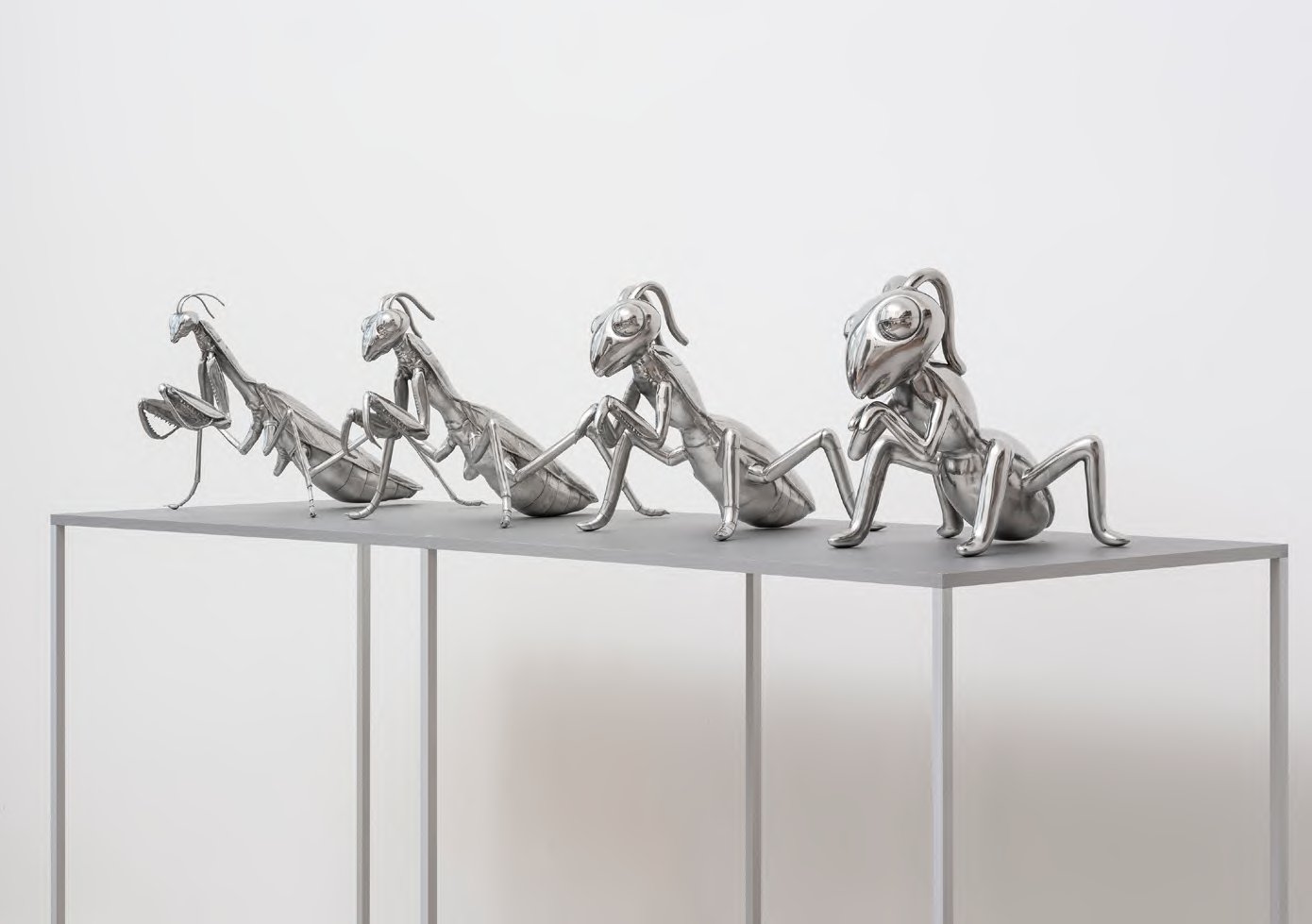
Your work engages with hybridity and metamorphosis, resonating with Rosi Braidotti’s “metamorphic others.” How influential has her thinking been?
OLIVER LARIC
Braidotti’s ideas have been very influential. Thinking about transformation not just as a change from A to B, but as a constant state of flux, has been liberating. It helped me articulate why I’m drawn to depicting forms that are caught mid-change, never quite settling, seeing metamorphosis itself as a fundamental condition, rather than just a transition between fixed states.
MANUS
Keller Easterling’s concept of “subtraction” describes how unbuilding shapes environments as much as construction. Do you see parallels between this and your process of manipulating or fragmenting existing forms?
OLIVER LARIC
The idea of subtraction and omission feels relevant. Taking an existing form, like a 3D scan, then segmenting it or reducing it to a wireframe involves a kind of unbuilding. It’s revealing structure by removing material, which can be as formative as adding material, in a similar way to how iconoclasm is productive in generating images by destroying images.
MANUS
An argument could be made that your work prioritizes process over a final outcome. Would you agree with that assessment? How central is the “how” of making to the work’s concept?
OLIVER LARIC
The process is certainly what Im drawn to. How a form is scanned, processed and then materialized – these steps are integral to the work. The techniques themselves, whether historical or contemporary, often embody the ideas about versioning, mediation, and transformation. So, the “how” and the “what” feel deeply intertwined. Im drawn to tutorial and process videos; the type of content that is a means of communicating the stages of production rather than an immutable outcome.
MANUS
In your video work Exoskeleton, you layer different scenes or subjects similarly to different instrumental stems in a musical notation. How do you technically achieve this isolation and layering of subjects, often shot at different times or speeds?
OLIVER LARIC
The isolation often happens through digital means, similar to rotoscoping or using green screens, although sometimes the source material might already lend itself to separation. Once subjects are isolated from their initial context, they can be recomposed in layers within editing or compositing software. This allows me to control their timing, scale, and interaction independently, creating these dialogues between elements that might have originated years apart or were filmed using different techniques.
MANUS
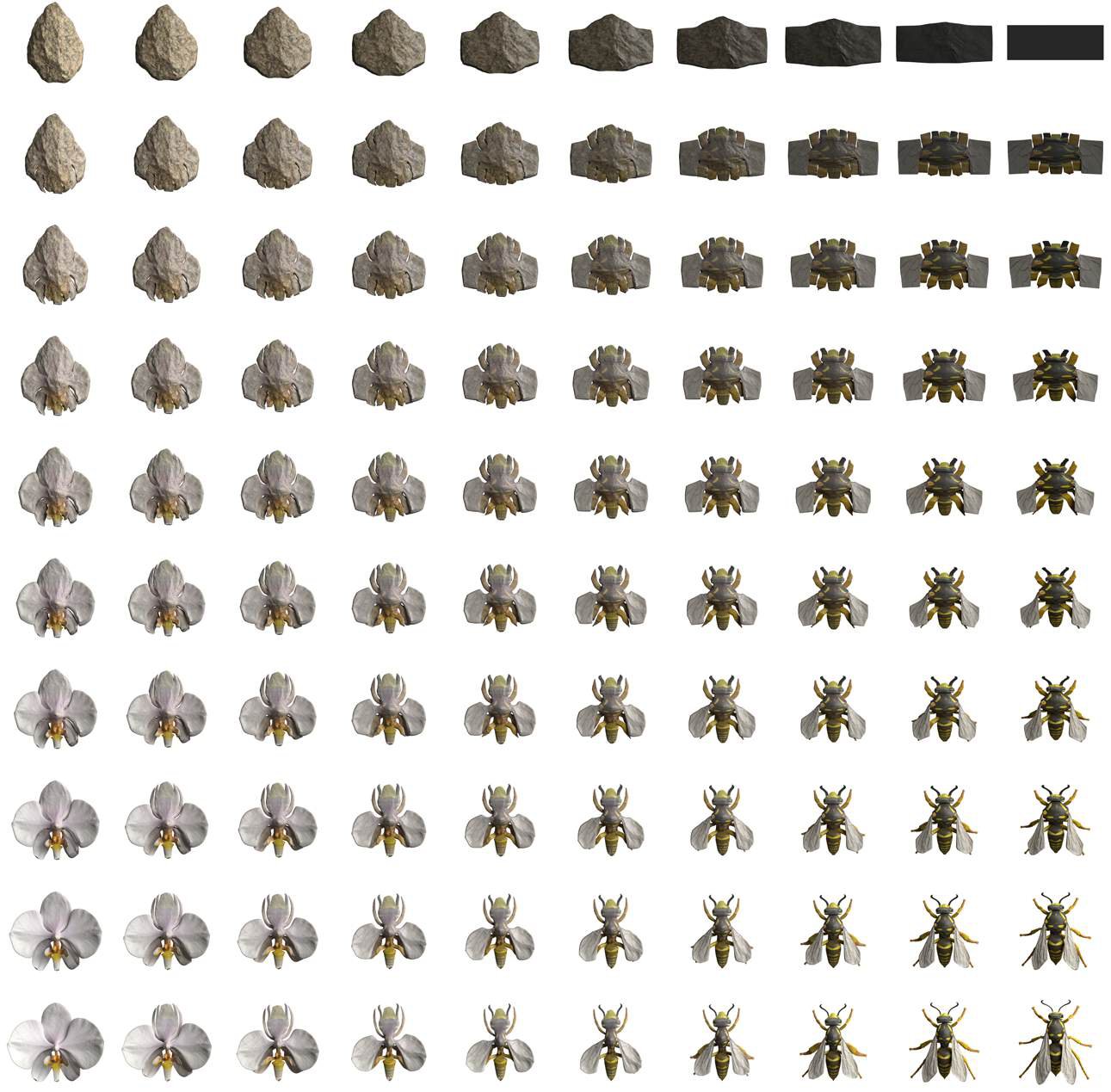
The “Rock Hyphen Orchid Wasp” NFT project morphs four corner positions into each other, manifesting as a grid of one hundred hybrid forms. Does this structure suggest a finite set of possibilities, or is the grid itself conceived as potentially expandable or mutable?
OLIVER LARIC
The initial grid presents a defined set, 100 variations exploring the spectrum between the four elements. However, the underlying concept of blending and transformation doesn’t necessarily end there. While this first incarnation has boundaries, the generative process itself could be expanded or adapted. The grid offers a snapshot of possibilities within that defined framework.
MANUS
You’ve explored decomposition and regeneration. Could digital processes like data corruption or file degradation be seen as analogous forms of “decay” within your work?
OLIVER LARIC
That’s a relevant analogy. Data corruption, file format obsolescence, link rot – these are forms of digital decay or degradation. They represent the inherent instability and impermanence even within the digital realm. Exploring these digital failure points could certainly be seen as parallel to exploring physical decomposition, highlighting the material realities of digital information.
MANUS
You’ve explored the lineage of images in Versions. How do you think algorithmic curation and AI image generation are currently impacting this lineage and our collective visual memory?
OLIVER LARIC
These tools dramatically accelerate mutation and recombination, potentially obscuring lineage even faster than before. Algorithmic curation creates personalized visual streams that might fragment shared visual memory, while AI generation introduces images that blend seamlessly with historical ones.
MANUS
As you make scan data publicly available, how does sharing the “source code” fit into your process? Does seeing others use it feed back into your practice?
OLIVER LARIC
Sharing the data feels like a natural extension of the interest in versions and circulation. It allows the forms to continue evolving beyond my own intervention. Seeing how others reuse, remix, or reinterpret the scans is fascinating – it confirms the potentiality inherent in the data. While it doesn’t always directly dictate my next step, it certainly reinforces the idea that the artwork isn’t a fixed endpoint, but rather a node that can generate further activity. It becomes part of a larger ecosystem of images and forms.
MANUS
You use photogrammetry – taking hundreds of photographs – to create a 3D model, rather than always using scanners, particularly when museum access is complex. Could you elaborate on this process and why you sometimes prefer it?
OLIVER LARIC
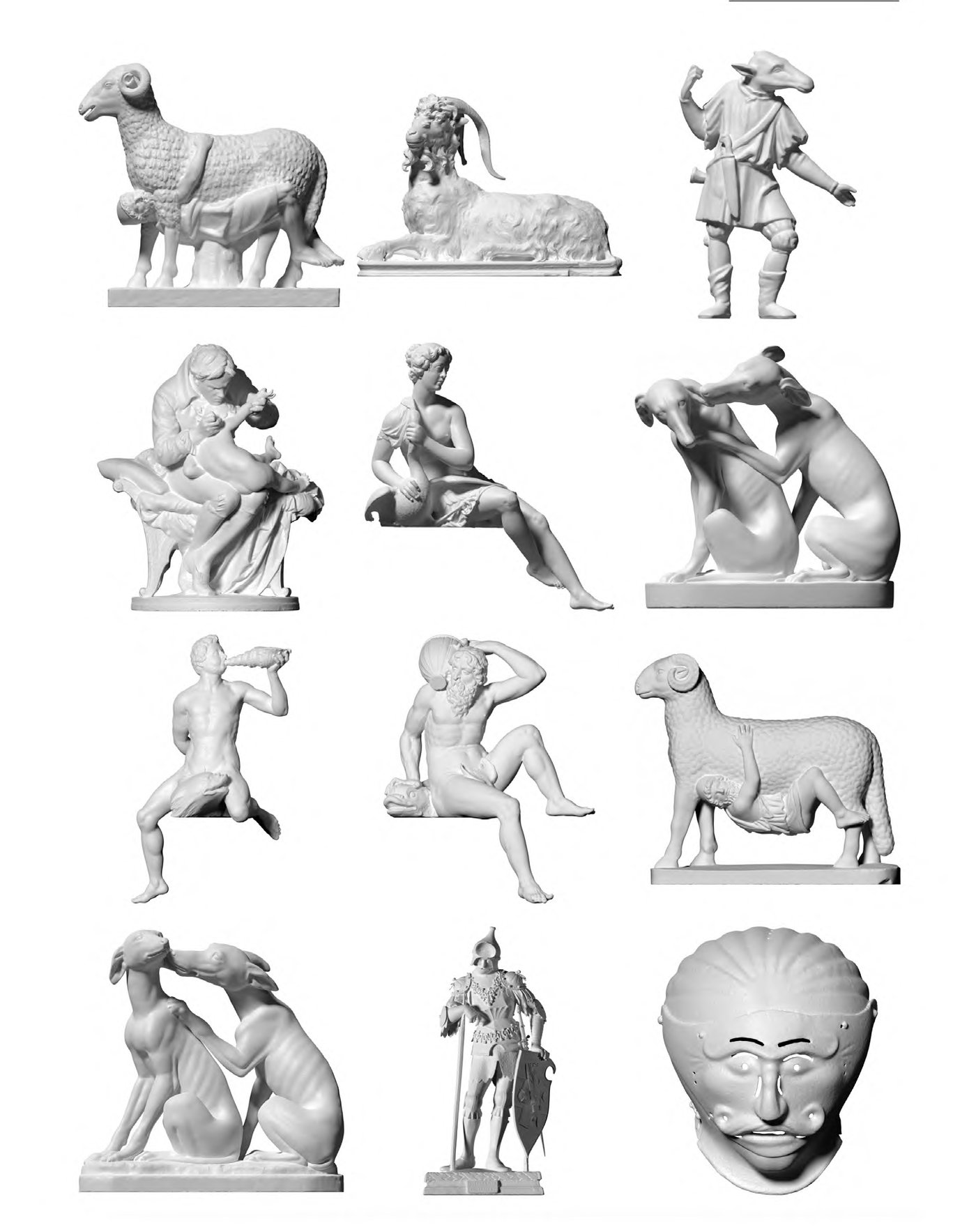
Photogrammetry offers a degree of autonomy. While scanners might have been more precise in the past, generating a model from photographs now allows me to capture objects without needing formal permission or navigating complex institutional agreements, especially with works in the public domain. It requires careful shooting to get sufficient overlap and detail, and then a software reconstructs the form. It feels like a less dependant approach, using readily available technology to gather the necessary data independently.
MANUS
Regarding the threedscans.com archive, you worked with an IP law specialist to clarify the legalities of scanning and sharing public domain works. How important is establishing and sharing this legal framework as part of the process of making these scans accessible?
OLIVER LARIC
While my understanding was that public domain works could be scanned and shared freely, there’s often confusion or institutional resistance. Collaborating with a specialist helped articulate the legal basis clearly. Sharing this framework alongside the scans might empower others to use the data confidently and perhaps encourage a broader understanding of public domain principles in the digital realm. It’s part of the process of not just sharing the data, but also the conditions for its open use.
MANUS
Your scans have seen wide distribution beyond traditional art contexts, appearing in places like Eurovision or Netflix productions. How does this pop-cultural or commercial reuse relate to your intentions in making the data freely available?
OLIVER LARIC
Some of my earliest experiences of publishing work have been affected by other people’s interpretations of the work. Seeing the scans used in varied contexts, including commercial or pop-cultural ones, is part of letting the forms circulate freely and find new lives. It demonstrates how these images or models can somehow detach from their previous art-historical context and establish new dialogical relationships.
MANUS
Digital tools evolve rapidly. Does the potential obsolescence of software or file types factor into how you approach creating and archiving your digital work or scan data?
OLIVER LARIC
Obsolescence is a constant reality with technology. While I try to use relatively stable formats where possible, especially for archiving scan data (like STL or OBJ files), there’s no ideal solution. Part of the process involves accepting a degree of impermanence or future incompatibility. Perhaps this ephemerality is just another characteristic of the medium. For project files, maintaining compatibility can be challenging over the long term. I don’t think it should paralyze the process itself. Maybe the focus shifts slightly towards the distributable data, which might survive in different forms even if specific software becomes obsolete.
MANUS
Considering the “perpetual beta” state of online images, does the concept of a “finished” artwork still hold relevance for you, particularly for digital or distributable pieces?
OLIVER LARIC
“Finished” feels like a less relevant term for works designed for circulation and adaptation. Perhaps “released” or “published” is more accurate for a specific state, but the potential for further versions always exists.
MANUS
How do pragmatic reasons like printer size limitations influence your sculptures? How does embracing such constraints become a part of your process?
OLIVER LARIC
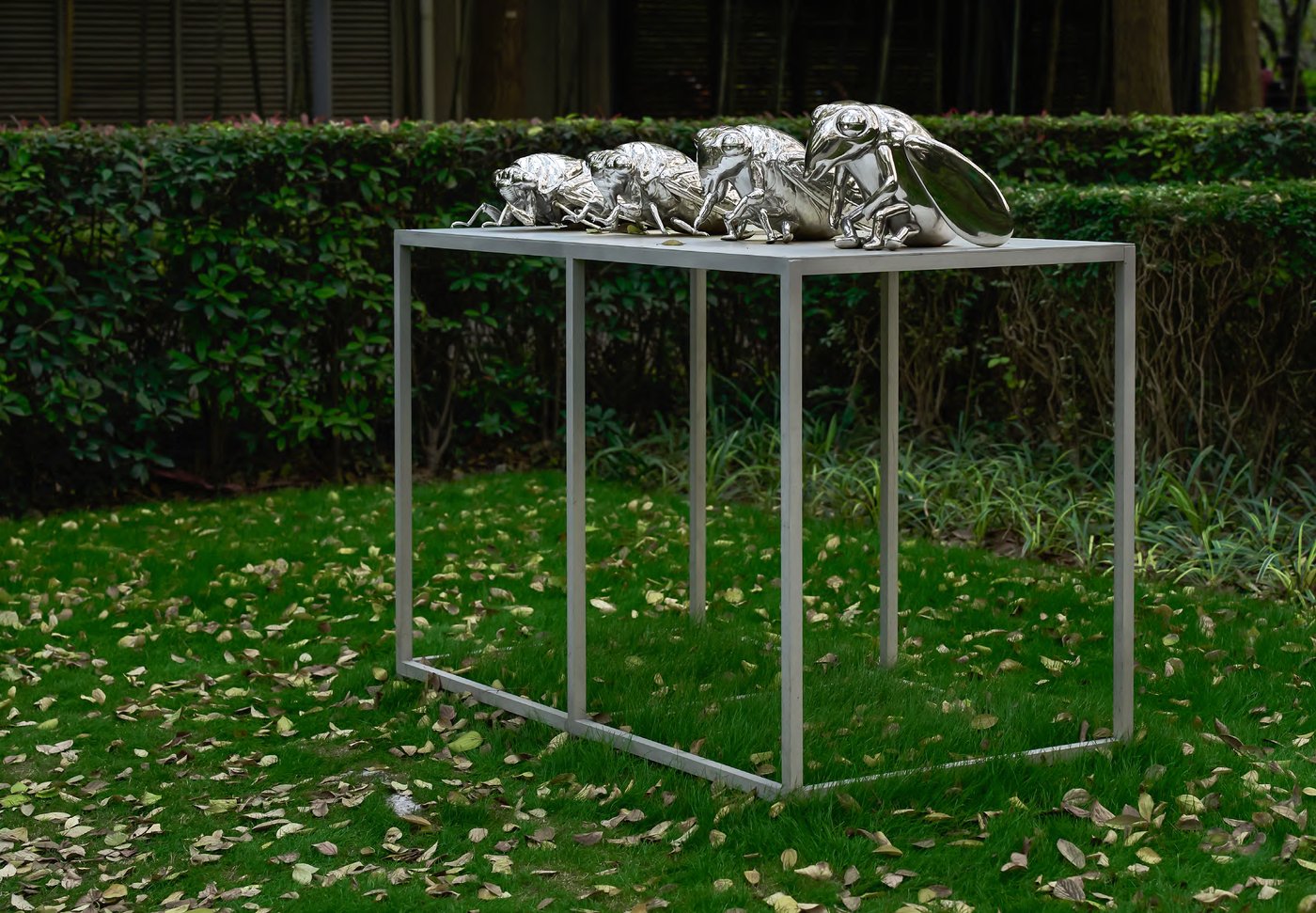
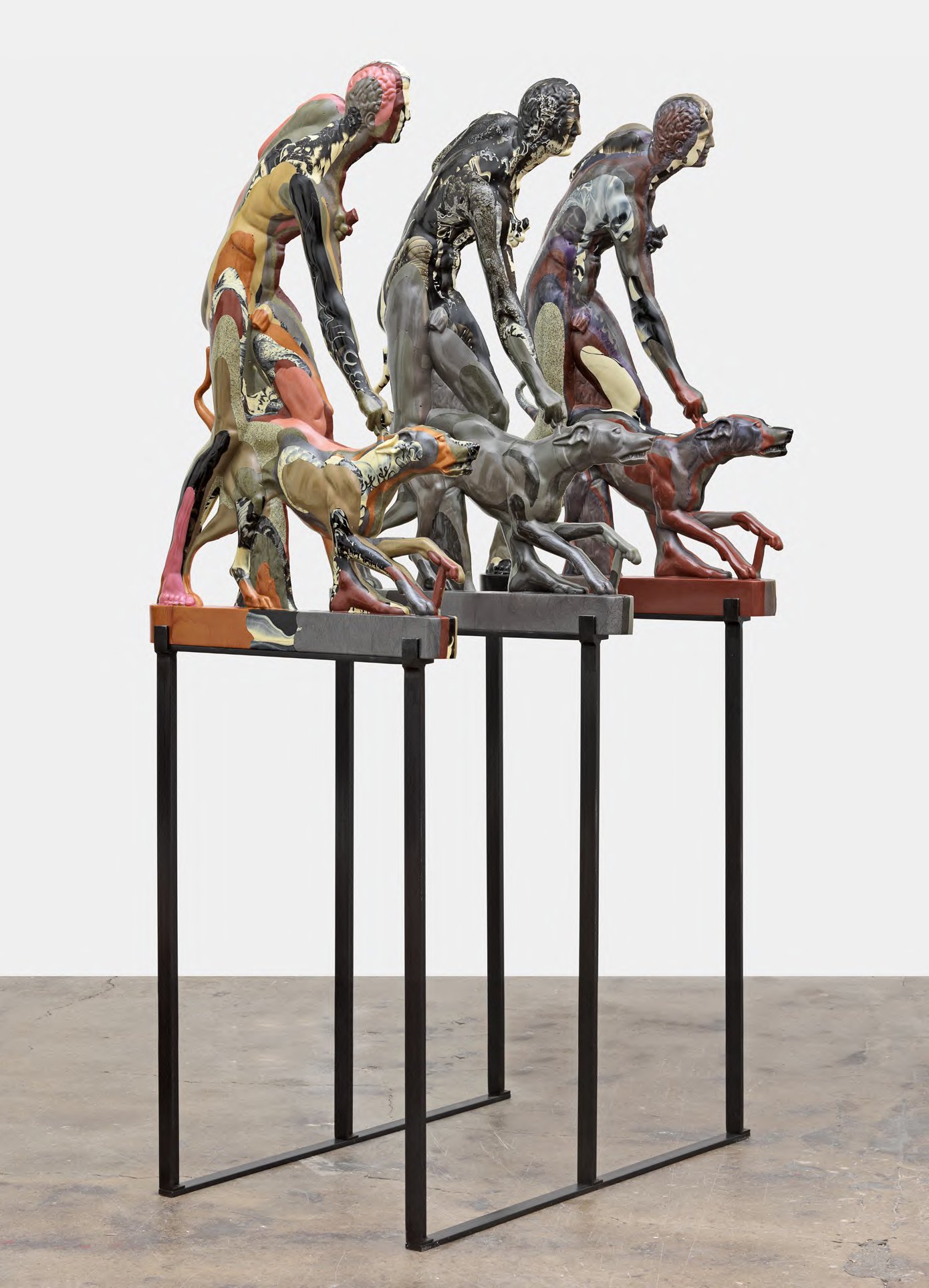
Constraints often generate interesting solutions from my experience. Having to segment the sculpture wasn’t just a technical hurdle; it became an opportunity to treat each part differently – varying the wall thickness and using wireframe structures. It breaks the ideal of a monolithic form and highlights the construction. Working with the limitations of a process, like 3D printing, often leads to formal decisions that wouldn’t have emerged otherwise. It makes the method of production visible within the object.
MANUS
In past interviews you mentioned making the sculptural walls very thin (2mm) and perforating parts to reduce material and allow views inside. Is this material eco nomy or transparency a consistent aim in your sculptural process?
OLIVER LARIC
There’s definitely an interest in using material efficiently and exploring lightness, both literally and perhaps conceptually. Thin walls and perforations push the technical limits of the printing process but also dematerialize the object to some extent. Allowing views into the internal structure – the supports, the hollows – works against the idea of sculpture as just a solid exterior form. It exposes the mechanics, making the inside as relevant as the outside.
MANUS
There’s a sense of soft contours in some of your 3D prints, an almost ungraspable materiality that seems to enable transitions into their environment. Is this blurring of boundaries between object and surrounding threedscans.com, 2012 – ongoing space something you consciously cultivate? Archive / website
OLIVER LARIC
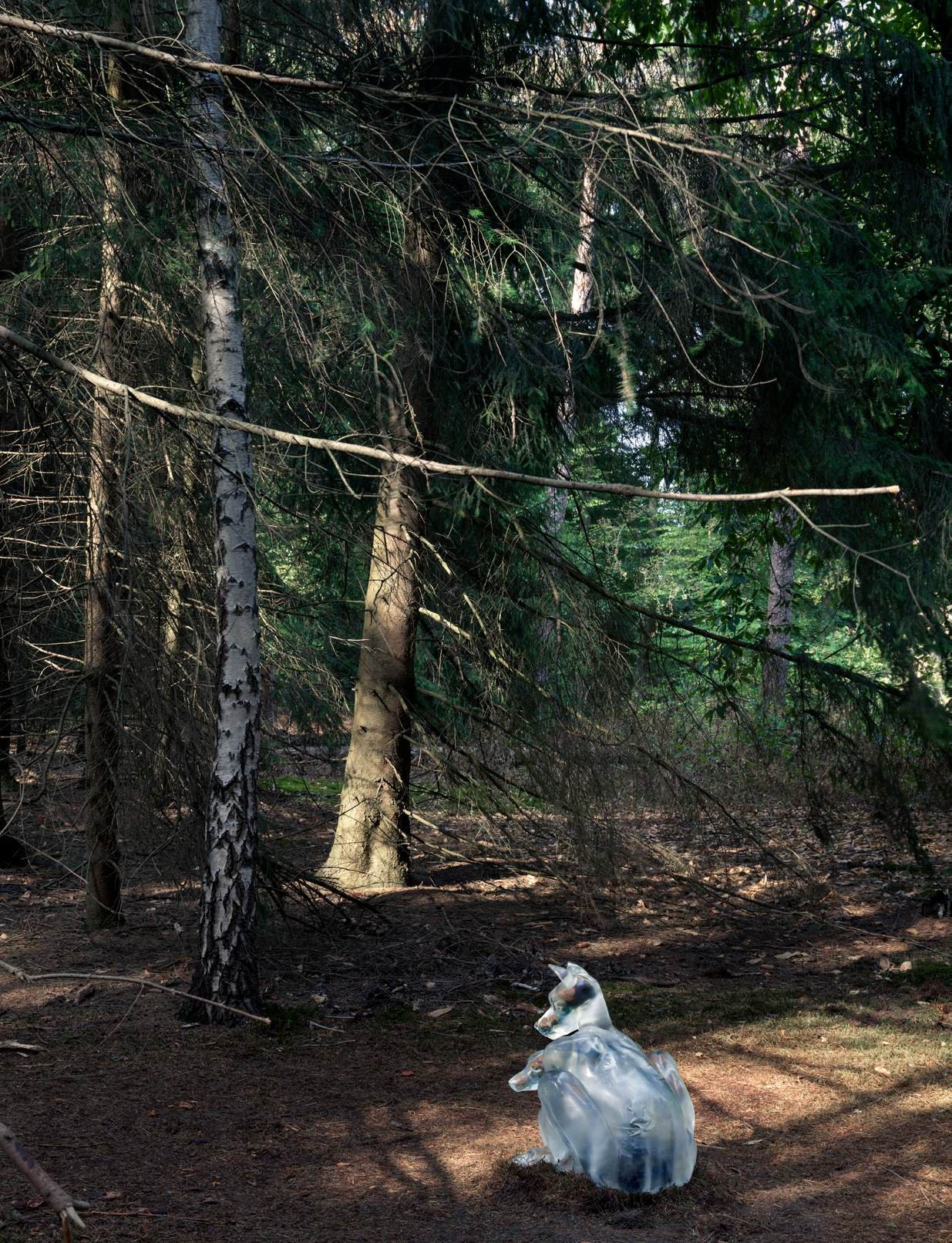
The idea of “soft contours” is interesting to me. Perhaps the translucency or thinness of some 3D printed materials and how their negative space activates the environment contributes to that feeling. I’m certainly interested in how objects relate to their context, and maybe the ambiguous materiality allows for a less defined separation, a kind of visual permeability with the space around them.
MANUS
Your choice of objects to scan sometimes seems self-reflexive, like scanning plaster casts or photosculptures, which are themselves forms of reproduction. Is drawing attention to the history and process of mediation itself a consistent aspect?
OLIVER LARIC
Often the choice of source object relates to its own history of reproduction. Scanning a plaster cast, which is already a tool for distribution, or a photosculpture, which anticipates 3D technology, continues a conversation inherent in these objects.
MANUS
Looking forward, are there specific historical periods, cultural artifacts, or forms you are particularly interested in exploring through scanning and transformation in the near future?
OLIVER LARIC
There isn’t one specific area, it tends to be more driven by chance encounters and ongoing accumulation. However, I remain interested in objects that have complex histories of reproduction or transformation themselves – things like medieval reinterpretations of classical forms, or objects that exist in multiple fragmented states across different collections.