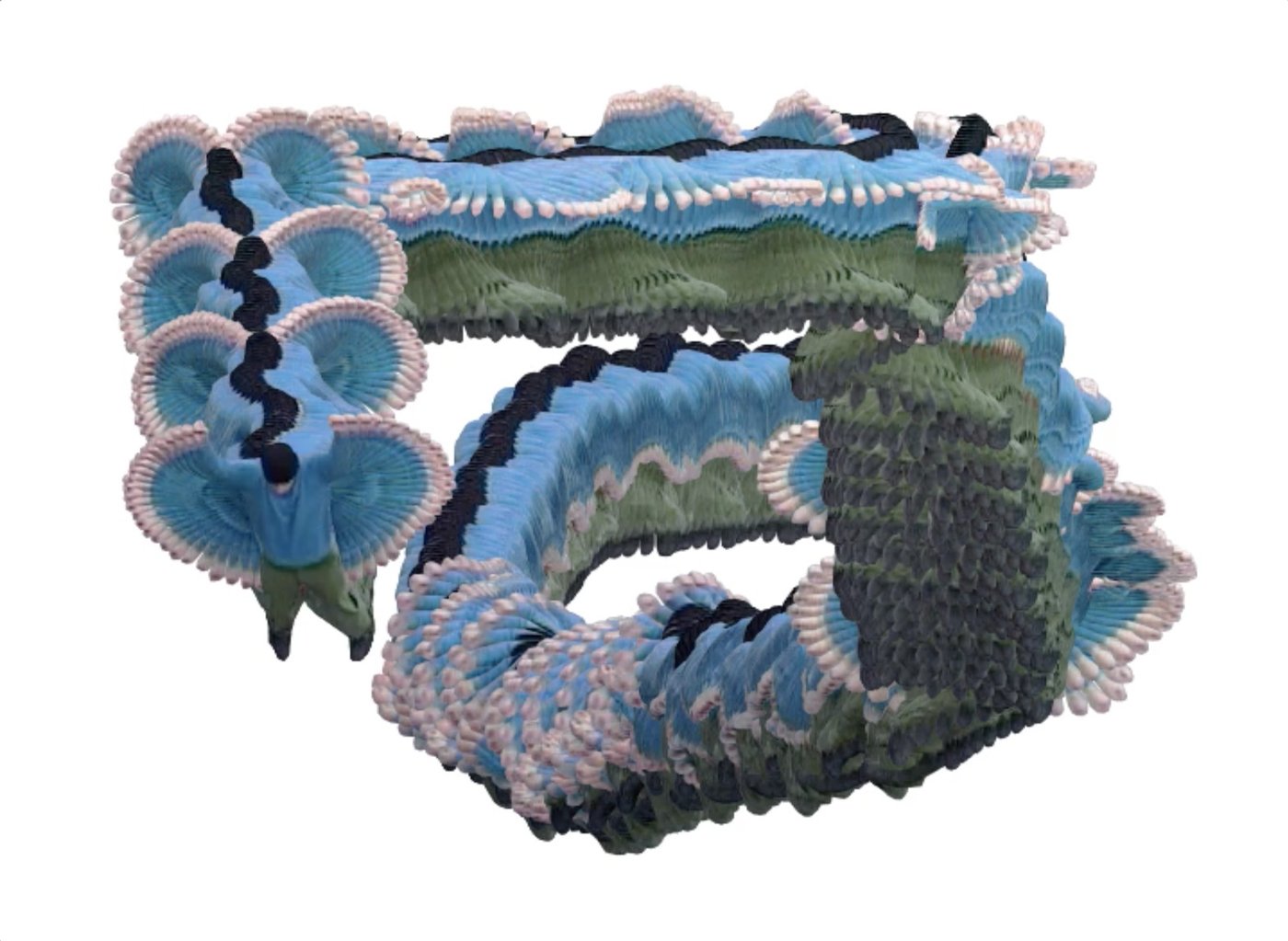
Francesco Urbano Ragazzi: As you know, this conversation is about the digital, whatever that means, as an exhibition space. So my first question is about how you approached the internet in the early days. What did it look like, and why did you choose it as a venue for making art?
Oliver Laric: I was born in 1981, so I still experienced magazines as influential and remember having to go to specific shops that imported them from around the world. I studied graphic design, and for that reason I probably fetishized magazine culture even more. But when I started noticing online publications and blogs, it was a quick shift. I recognized something significant and almost too good to be true. So I think I had quite techno-optimistic initial years of utilizing the web as a space for distribution and production.
Also, because of my background, I didn’t address an art audience. I didn’t do exhibitions or run an exhibition space with friends. My go-to platform was my own website, and then in 2006, a little bit later, a blog that I started with three colleagues at the University of Applied Arts in Vienna: Aleksandra Domanović, Christoph Priglinger, and Georg Schnitzer. “vvork.com” was a pre-Tumblr image-based art blog. For us it was a way to promote other young artists who possibly didn’t have an audience yet, and also a way to show work without the necessity of curatorial legitimization. We had about twenty thousand viewers a day, which back then felt like a large number, so we knew, whatever the situation, even if nobody else was interested in showing us in physical spaces, there was an audience online. In recent years I’ve gotten accustomed to relying on the platforms of others, and I miss the independence. I miss that 2005–10 era of taking matters in your own hands and not playing the platform monopoly game.
FUR: We’re all working for Meta and TikTok now.
OL: When were you born?
FUR: More or less the same—1983, and 1984. We also experienced the same enthusiasm for the internet in the sense that we participated in the Internet Pavilion for the Venice Biennale by Miltos Manetas. Through the collaboration with Miltos we saw the internet as a counter-power, a desert to be explored, an environment where art could deal with reality quite directly. We also started to understand that art doesn’t need institutions to happen, but is its own institution. This was a founding principle of many exhibitions we curated thereafter.
OL: Did we meet at the time of the Internet Pavilion?
FUR: I think so! I mean, I don’t know if you were physically there. I was one of the co-curators of the second edition, The Island of the Nets, on San Servolo Island in 2011. It was the one with Rafaël Rozendaal’s BYOB.1
OL: I was there in 2009 in the exhibition space at the Magazzini del Sale with Rafaël, Aleksandra, Petra Cortright, and others.
FUR: Then in 2013 we curated another edition, which was titled The Church of the Unconnected. It was a solo project by Miltos, who started from the fact that 2013 was the last year in which people connected to the internet would outnumber the unconnected.
OL: Oh interesting, I didn’t know that.
FUR: According to a report released by the International Communication Union, almost 40 percent of the world population was connected to the internet in 2013.2 Of course it is a matter of statistics, but the connected people were expected to become the majority the following year.
At the 2013 edition we had a church, the Oratorio di San Ludovico, and we decided to use it for what it was. Miltos made a series of paintings inspired by Tintoretto to explain to the unconnected what the internet was. We also organized a Mass. While Mother Maria Vittoria Longhitano, Italy’s first female priest, was officiating her Anglican rite, Miltos was VJ-ing some websites by Neen artists onto the altar.3 Your work Aircondition was part of this Sunday gathering.4
OL: I think Neen is really overlooked, and Miltos was such a pioneer in many ways. I have a lot of admiration for the work he was doing. I guess he was mentioned in Nicolas Bourriaud’s book Postproduction (2002), but I don’t feel there’s enough attention or even understanding yet of how significant all that was.5 Maybe it’ll be properly historicized at some point.
FUR: Neen was presented through a roundtable at Gagosian in New York on May 1, 2000.6 It anticipated by at least five years, if not ten, many traits later associated with post-internet art, from the adoption of new distribution strategies to fluidity in operating on and off the screen. I’m thinking for instance about the Electronic Orphanage, the space designed by Andreas Angelidakis in Los Angeles, but also about the fact that Miltos has always treated his canvases as screens and vice versa. Compared to post-internet art as it has evolved, it seems to me that there was something more joyful, more visionary, in Neen. Something capable of breaking certain rules rather than adhering to them perfectly, as we all do now. Here I’m thinking about the attempt at squatting the 2002 Whitney Biennial via the website whitneybiennial.com.7
OL: I’ve been trying to be mindful of the permission structures I follow. I feel like I encounter so much work that relies on previously negotiated permissions. There’s not that much excitement when relying on so many approved concepts. It can be stagnating and numbing. So, yeah, I think back to the days of Neen, del.icio.us, Nasty Nets, and 53 O’s, and how much was done with so little reliance on proven concepts. Maybe that sounds horribly nostalgic.
FUR: What inspired you in the Neen movement?
OL: As I mentioned, I didn’t study art, so I discovered it through some accessible figures like Maurizio Cattelan. Although not all of them were speaking a language that was familiar to me. Neen was accessible, and it spoke a language that felt familiar. And people like Miltos or Cory Arcangel were very significant to me when discovering contemporary art.
FUR: It’s interesting that now there’s a lot of talk about disintermediation provided by the internet, but sometimes there seems to be only different, if not more, mediation than in the 2000s. How do you think the internet has transformed, and art on the internet accordingly?
OL: It’s a very big question, so it might be easier to talk about it in specific terms. Recently I was revisiting some older work on YouTube, for example. YouTube was a single platform, without geographic differentiation of content. There was a simplicity to that. It was before algorithms were anticipating or emphasizing preferences, which definitely defined a massive shift. In the early YouTube days, there was a front page that suggested videos, but it wasn’t catering to your browsing history. The geographically specific internet is a shift from my early memories. How about you?
FUR: It’s interesting to think, as you suggest, about the regionalization of the internet. You mentioned cookie tracking, which is internal to the code; another important and yet external factor is censorship, or anyway the politics regulating relationships between multinational tech companies and certain countries, which make the internet look different according to the place from which you’re accessing it. For example, an artist now living in the Emirates told us that Instagram is much a safer space there than Grindr for LGBTQ+ people. The purpose of Grindr is indeed quite evident, while on Instagram one can build some secret vocabulary for flirting or arranging encounters without being tracked by police. I think now it would be interesting to deconstruct this idea that the internet is a universal tool, underlining the regional possibilities, the regional differences, that still exist and are still powerful engines for the development of internet culture. I don’t know if you have similar experiences.
OL: I guess we’re talking about two opposing forces that affect the same movement. What I mentioned is a supposedly universal internet becoming regional by catering to the individual and their perceived personality. So there’s a corporate pull toward more specificity. While you’re saying that the idea of the universal internet is one that needs to be picked apart because there is an ignorance of regional restrictions? I guess talking about the older incarnations of the internet as more universal is a simplistic narrative, since the regional restrictions were there before cookies.
FUR: Do you think there is—let’s say—a way for this older attitude to resist in the present environment?
OL: Sure, and I guess that’s part of the ongoing conversation around decentralization. I’m probably not the biggest expert on the subject, but I think that’s where a lot of the ethos among the Web3 and DAO conversations operates, in an attempt to move further away from platform monopolies.
FUR: What do you think about the option of exiting corporate platforms?
OL: I think it’s for the large part promising. There’s also a techno-optimist side, which I don’t feel so close to. But I feel confident that some force will determine significant change when I look at who’s putting brain power into it. I’m seeing a lot of young, smart people dedicating their entire energy to developing ways in which the internet could function. So from this perspective it looks promising, but it also feels early to judge. It’s maybe similar to the debate around social media in the 2000s. It’s hard to currently understand where the train tracks being built will take us.
FUR: Does the same cautious optimism apply to blockchain-based platforms for selling artworks? Sometimes I have the feeling that in these contexts, a lot of responsibility is being placed on the shoulders of the artists—from production to promotion—and wondering if this is not part of the same neoliberal process for which all kinds of workers are transformed into entrepreneurs.
OL: The financial split is more favorable toward the artist, as is the standardized distribution of royalties on the secondary market. But there is certainly a focus on the responsibility of the individual as an artist, broadcaster, and manager. There is a strong smell of neoliberal hustle culture. But, that said, this also ties back to what I mentioned at the beginning. I used to have my own platform, and then I kind of got comfortable with my galleries doing my communicating. I still have my website, but most of the press communication is run by my galleries. So I can see both sides about the reach for more autonomy.
FUR: It’s interesting that you mention autonomy as a value. It’s so relevant in general nowadays. It also makes me think about the chances artworks have on the internet to be freely confronted with other forms of cultural production. Galleries and museums are separate spaces dedicated to art, while on the web, and especially on social media, images of different kinds collide more horizontally. Artworks thus gain some sort of autonomy from the institutions that have hosted them so far. They come back into everyday life and reality. We see this difference as curators, but I don’t know if you perceive it as an artist who has worked on the internet since the early 2000s.
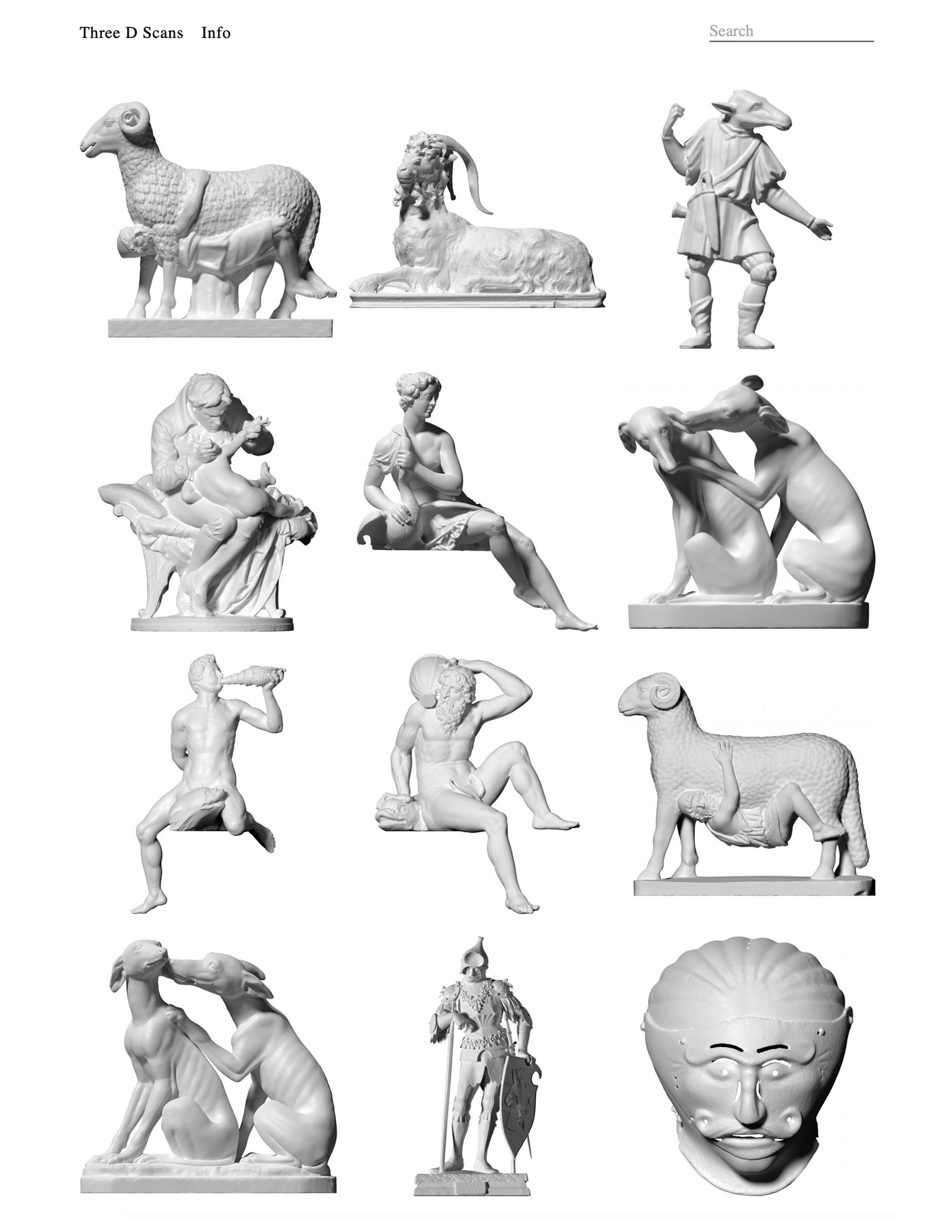
OL: I guess for me it’s not such a striking shift because I’ve always had an online audience. I actually had an online audience first. My videos are all accessible on my website at full resolution. They have always traveled through non-art media and circulated in publications outside the scene we might be part of. That’s really exciting to me. I have an archive of 3D models that is mostly used by non-art people, designers, and a general audience. I appreciate that I don’t communicate solely with people who’ve read the same books. It feels slightly unfashionable to think about audience in art compared to audience in literature. In art, there is often this romanticized idea of the individual working for themselves, which I can’t relate to. I definitely make work for other people, and I like the idea of making work for people who might not be regularly experiencing exhibitions. I would like my work to be accessible without needing much in the way of backstory.
FUR: Speaking of audience, you and I come from the YouTube generation. And one of the big changes enhanced by that platform, which launched in 2005, was the possibility for everyone to control their fruition of an artwork. One can skip part of a video, jump from one point to the other, be the editor of their own viewing experience, with unprecedented ease. Now, we already know that this can be annoying for some filmmakers or artists. What strikes me, though, is to notice that skipping and similar functions are still impeded on many of the online platforms that contemporary art museums use. The institution can’t imagine that viewers could decide for themselves how to watch something. What do you think?
OL: Restrictions on skipping through an online video are funny to me. It feels insecure. Perhaps there is a lack of confidence in the work if you need to control how people experience it. There is a beauty in allowing a viewer watch the film online without being dogmatic. This has certainly influenced my way of making videos, because I think of the online viewing first and the gallery viewing second.
FUR: What’s the difference?
OL: If you can commit to traveling half an hour to visit a gallery, you’re probably gonna sit through a twenty-minute video. Because of the effort you made, you commit. Online you don’t have that commitment, so you might just skip through. It’s more complex than that, but it’s one factor.
FUR: What do you do, then?
OL: I try to make my videos dense, as if you’re already skipping through them. A lot of my videos last three or four minutes even if it took me years to realize them. I think most people watch them online. Then, in the gallery, they tend to watch them more than once because they’re so dense. The same video can thus have different lengths: a three-minute video can become a six-minute video or a nine-minute video when it’s watched a few times in a row. I definitely like the idea of not forcing audiences to watch the video under “optimal” conditions.
It also makes me think of an interview with Dr. Dre about the final mixing process of a song. You listen to the music in the studio through good speakers, and spend weeks trying to balance every snare and hi-hat, but the final test is made on a really shitty audio system, like a car stereo, to see if it still sounds good. That’s the other thing I have in mind when I make videos: they have to work on a smartphone. I like to work on small formats as well as on 4K projections in a dark space. This doesn’t need to be a rule for anybody, but I hope a work can survive on a Nokia phone and still give you something.
FUR: When we conduct workshops with young filmmakers, they’re usually obsessed with defining the ideal context of consumption for their artworks. This, if you wish, comes from a certain ideology related to modernism. In the last two centuries it served to establish the autonomy of art, and museums and galleries as institutions. But in a digital environment, this same ideology becomes quite rigid and absolutist, maybe untenable. In an environment where all content is constantly upcycled and every artwork reverberates into infinite fragments, the idea of the integrity of the artwork seems obsolete to me. After all, distraction is part of life, even part of how perception works. So why not embrace the power and chaos of distraction? Perhaps one should abandon the idea of controlling one’s own work and look more to Situationist or Fluxus strategies.
OL: I think the freedom of how a work is experienced online doesn’t need to be replicated in a gallery. There’s something to be appreciated about putting time and energy into a presentation of a work in a space. I don’t think that’s necessarily conservative or a contradiction in accepting something less formal online.
FUR: How does it work for you? Do you usually think about two versions of the work from the beginning—one for the digital space and one for the physical? Or do you rather think about restitution in the physical space later, as soon as the occasion arises?
OL: It definitely starts by thinking about the browser as the space of experience. My first thought is still how the work will look on a website or mobile phone screen. But the one I present in galleries or at festivals and screenings is not a different work. I try to make something that works in different worlds, that doesn’t require “ideal” settings. When I work on a video, I export it to my phone regularly so I know how it looks on a small screen. There might be details that add to the experience if you see them on a big screen, but they are not essential to the experience.
FUR: Let’s go back to your comparison between literature and the visual arts. Another difference is that books are usually thought of as replicable objects, while visual artworks are associated with uniqueness. In this sense it’s interesting that you are currently working on sculptures that are somehow copies or versions of ancient artifacts. It’s interesting also because copies and replicas had a totally different status in other eras. Think about Greek and Roman statuary, for instance, where concepts like “copy” and “original” were more blurred.8 What got you interested in copying artifacts from the past in the digital age?
OL: First of all, I feel that writers celebrate their references more than visual artists do. The idea of subjective autonomy feels less present. This probably also relates to the idea of the copy. Hunter S. Thompson retyped The Great Gatsby word for word so as to know what it feels like to write a great novel.9 And I kind of understand that feeling of working with somebody else’s words or somebody else’s images. Since my childhood I’ve experienced music that references other musical eras, so the idea of copy has always been interesting to me. It’s very familiar territory. This phenomenon took on another dimension in the era of YouTube with the proliferation of fan videos, interpretations, remixes, and so on. I suppose I had a sense of this being a particular quality of our time, but then I came across different periods of time when a similar sentiment had been popular.
FUR: What were your references while studying copies in the ancient world?
OL: I’m a bit rusty on the things I was reading while making these Versions videos.10 But one person I still find very interesting is Margarete Bieber. She’s an academic who focused on the differences in drapery in Greek versus Roman sculpture in the beautiful book Ancient Copies.11 Another person who has been impactful to me more recently is Anna Anguissola. She co-curated the 2015 show Serial Classic at Fondazione Prada, Milan, and wrote a beautiful book on support structures in marble sculptures.12 Her hypothesis is that architectural elements like supportive struts were possibly considered part of the design and not mere by-products. I really appreciate the idea that the secondary qualities of a work are part of the work itself, against a Kantian distinction between primary object and supporting element. The two are rather entangled and can’t be distinguished. I have a feeling that there can be a more holistic awareness of what constitutes a work; maybe it includes how you credit and pay your collaborators and address your audience, and how the work connects to other eras and artists. I’ve also been reading Dan-el Padilla Peralta, Denise Eileen McCoskey, and Mathura Umachandran, who have been revising narratives around naive ideals of a classicist discourse emphasizing a grandeur of democratic principles while ignoring the complexities of a glorified past.
FUR: Let’s move from the concept of copy to the notion of appropriation, which was a core strategy of a certain internet culture but has been continuously put into question. How do you feel about it? I’m asking this because Versions is a project based on the possibility for someone to appropriate your work, but the 3D-model archive you were mentioning earlier is also based on the same principle.
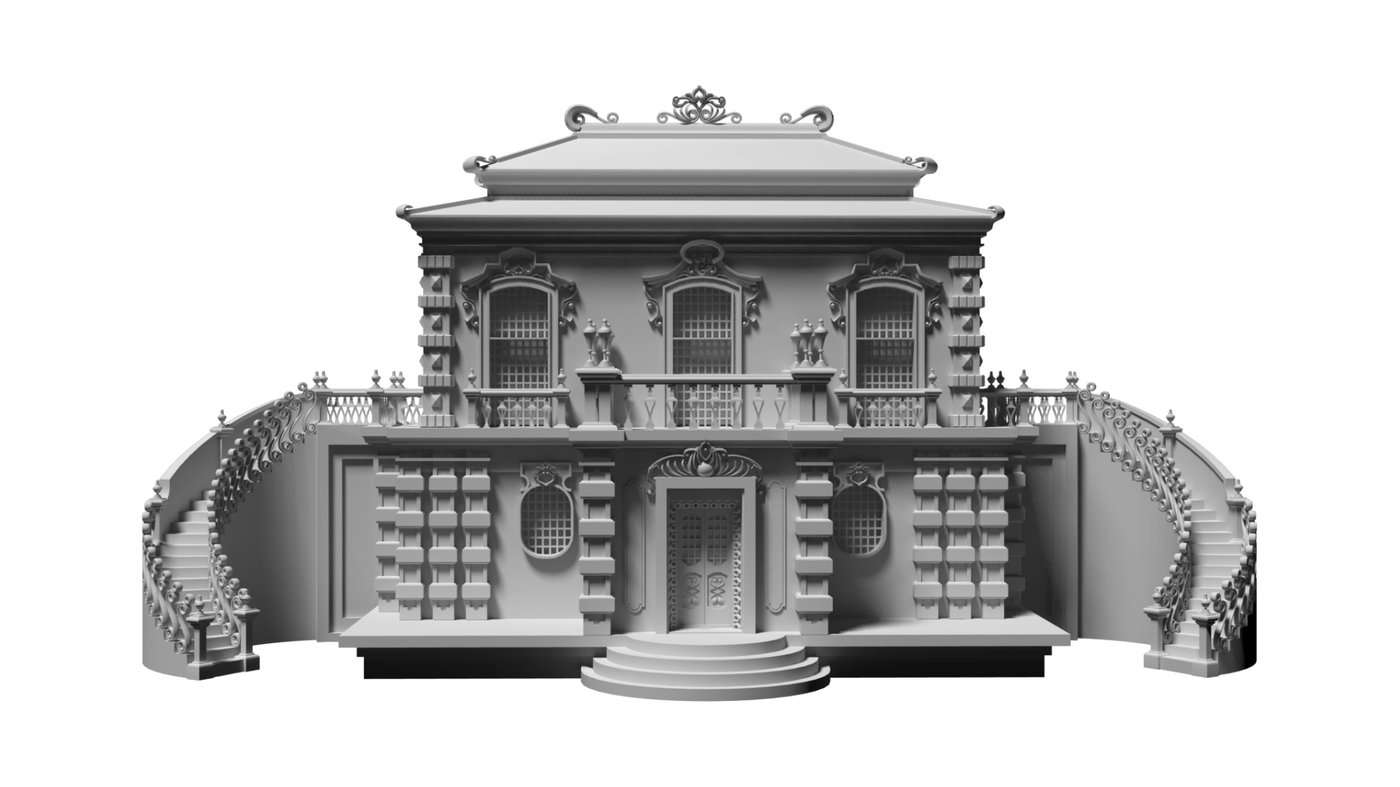
OL: Yes, I have this 3D-scan archive through which I make all the objects I scan accessible for anybody to utilize. They have taken on lives of their own. Some of them have appeared in the Eurovision Song Contest, others in a Migos and Nicki Minaj video, or in random places where I wouldn’t expect to see them.13 I’m not so interested in just using source material from others; I’m interested in creating tools for others to utilize, so the process remains more open-ended. The conversations around the complexities of cultural appropriation have also shifted. I’ve changed my thinking and intuition regarding how I’ve utilized and cited things in the past. One question to me is: Who has access to which material? And I’m considering this in regard to classical antiquity, because it is surely not neutral territory. At the moment, classical imagery is used by far-right groups in the United States who employ it to justify an ideal of European or Western hegemony, as is the case with the Proud Boys.
FUR: In this respect it’s also interesting to note that classical mythology worked in a very different way than the far-right voters think. Mythologies are usually associated with the foundation of a national identity, but if you read the works of academics such as Lucy Audley-Miller, you’ll see that myths evolved and adapted, participating in cross-cultural exchange. That’s why you find so many variations of the same narrative structure in different, even distant, lands.14 And if we consider how images travel from screen to screen nowadays, this mode of understanding mythology can be inspiring. That said, one more concrete question about appropriation: Has your work been uploaded to ubu.com?15
OL: I’m not sure, actually. I haven’t thought about UBU in a long time! I guess it still is an amazing resource. Isn’t there a list of people who have decided not to be included or want their material taken down?
FUR: Yes, there is. But in your case, even if you don’t know if you’re there, would you be happy to be there anyway?
OL: Oh, sure. It’s great to be included on UBU. I don’t think I’ve ever asked anyone to take down a video from a platform.
FUR: Some are worried that piracy can affect their economies. Do you see it as an opportunity instead?
OL: I see no harm for me personally. From my experience, it doesn’t affect my means of making a living from my work. Knowing that the works are also on my website hasn’t deterred collectors or institutions from buying editions. Or at least not that I know of. I’m really happy for things to be uploaded and used by others. I’m not so concerned about it. But it’s also case by case, so I understand if somebody wants to safeguard how their work is distributed. I’m not judgmental in that regard. Things also change if there’s an inverse power dynamic, for instance a corporation utilizing something for advertising purposes you’ve not agreed to. It’s happened several times that my videos have been copied for ads and I haven’t reacted. But I might in some scenario.
FUR: Concerning property and dissemination, what do you think about NFTs? I’m asking this also from, let’s say, a philosophical perspective. Through blockchain technology, digital objects, which are by nature easily replicable and extremely sharable, are brought back to a model that is closer to that of modern painting. Many commentators describe this process using the notion of digital scarcity.
OL: I think digital scarcity is one conversation and NFTs as a medium are another. They overlap, but to me the potential of NFTs is quite vast and not necessarily related to digital scarcity. Some of the most interesting projects in the NFT world utilize the potential of blockchain for financing new works and giving those who support the works some future incentives. For instance Emily Segal released an NFT token that generated something like $50,000 in twelve hours as the advance to write a novel.16 And with the smart contract within the novel token, one has access to early drafts but also some other financial incentives in case of publication. I see a lot of potential in these new ways of engaging with an audience directly. JPGs being sold is quite a particular side of the NFT word, but just one side of it. Tokenized access is another, and there’s a lot of potential there. I’m curious about how we’ll look back on this in five years, because I have a feeling it’s still too early to tell.
FUR: Then would you dismiss the notion of digital scarcity from the conversation?
OL: Artificial scarcity is not so novel and had a long tradition before the advent of the NFT. In the case of NFTs, I think one can’t solely talk about digital scarcity because the access is mostly unrelated to ownership. The potential for a right to resale is affected, but not the access. A structure has been established that allows some people to be compensated in a way that they wouldn’t have been before. When I was starting to make work existing online in the form of videos or websites or Flash animations in the mid-2000s, it would have been different situation for me and other people had there been a way of making a living from it.
FUR: Do you think that this economic recognition also improved cultural recognition for digital producers—I mean, recognition within the art system? Are these two kinds of recognition related, or we are still talking about two separate systems? I’m asking you this because you come from a generation that has really seen this change happening. When you were younger, I assume you were also used to living in an art world not so much interested in digital work precisely because it was difficult to produce value from a website, or a Flash animation, or even a video.
OL: This is the second time I’m experiencing a more intense public focus on digital work. The first time was when “post-internet” became a buzzword.17 Right now I feel like there’s another concentration of interest, which also comes with an awkward moment where people are trying to historicize something or insert themselves into a particular history. It does remind me of the 2013 days that you mentioned before. Who knows how long it will last? I don’t think it will.
FUR: Do you feel that your practice is or was represented by post-internet discourse?
OL: I don’t love the term, but I do understand the shift from the so-called net-art generation, where the idea of hacking an infrastructure was more at the forefront. I started making art in times when artists could use templates, work with generic systems, and not be so meta conscious of the tools at their disposal. We were just utilizing them. For me the internet was already a standard tool, and I didn’t have to communicate why or how I was using that tool; it was just like part of my repertoire. It was normcore, so to speak.
FUR: Are you interested in any way in the Metaverse?
OL: Not so much. I don’t see the full novelty of the Metaverse, unless it is the metaverse that is reliant on ideals of Web3. There I do recognize a shift in possibilities, which is also an ideological shift.
FUR: Where do you see the future of moving images?
OL: I have no idea. Something that I think is quite interesting to understand is how text-to-image generators will influence filmmaking.18 I’m curious to see the day when you log into Netflix, type something like “David Lynch + The Simpsons with the cast of Contempt,” and the algorithm generates the content you watch. I’m very curious how long it will take for text-prompted film to become standardized or even mainstream.
FUR: How do you think this will change filmmaking? Is the incredible possibility of customization the factor that interests you?
OL: It won’t bring an abrupt end to current standards, I don’t think, but it will heavily influence them. As with many things, I assume this development will not be binary, but a blend of hybrid formats. Stock imagery, for example, seems like a field that could be altered. I would assume that the job of “text-prompt specialist” will become common. It is a tool like any other that relies on subjectivity and experience. I’m not aware of a medium that automatically makes any user virtuosic.
Recorded on July 29th 2022
1.BYOB stands for Bring Your Own Beamer and is the name of a series of events conceived by Dutch artist Rafaël Rozendaal. During the opening day of Biennale Arte 2011, a group of more than fifty artists was invited to project websites, GIFs, and other digital artworks on buildings and in the park at San Servolo Island. The invited artists included Agnes Bolt, Alterazioni Video, Andreas Angelidakis, Angelo Plessas, Anna Franceschini, Billy Rennekamp, Britta Thie, Claudia Rossini, Cristian Bugatti, Eilis McDonald, Elisa Giardina Papa, Giona Bernardi, Hayley Silverman, Interno3 and crew, Iocose, Ivano Atzori, Jaime Martinez, Jeremy Bailey, Les liens invisibles, LG Williams/Estate Of LG Williams, Luca Bolognesi, LuckyPDF, Marc Kremers, Marco Cadioli, Marisa Olson, Marlous Borm, Martin Cole, Matteo Erenbourg, Mike Ruiz, Miltos Manetas, Nazareno Crea, Nikola Tosic, Parker Ito, Pegy Zali, Petros Moris, Priscilla Tea, Rachele Maistrello, Rafaël Rozendaal, Rene Abythe, Riley Harmon, Sarah Ciraci, Sarah Hartnett, Theodoros Giannakis, Travess Smalley, UBERMORGEN. COM, Valery Grancer, Wojciech Kosma, and Yuri Pattison. ↩
2.See ICT Data and Statistics Division, The World in 2013, PDF file. Accessed online, October 12, 2022. ↩
3.Neen was an art movement founded in 2000 by Miltos Manetas and Mai Ueda. Its name was chosen from a machine-generated list of words developed by Lexicon Branding, the company responsible for naming Powerbook, Pentium, Swiffer, Dasani, and other major products. Manetas hired Lexicon to supply a name for his movement with $100,000 of support from Art Production Fund as part of a project called “Name 4 Art.” As a word, Neen is meant to describe all artistic experience related to the computer screen. The original Neen collaborators included Rafaël Rozendaal, Lev Manovich, Angelo Plessas, Andreas Angelidakis, and Nikola Tosic. ↩
4.Oliver Laric, Aircondition, 2006 (color, sound, 2 min.), accessible at http://oliverlaric.com/airconditionvideo.htm. ↩
5.Nicolas Bourriaud, Postproduction: Culture as Screenplay: How Art Reprograms the World (Berlin: Sternberg Press, 2002). ↩
6.Miltos Manetas, ed., Neen (Milan: Charta, 2006). ↩
7.The website is no longer accessible in its original design, as it includes Flash content, which Adobe blocked from running in all browsers as of January 12, 2021. See Lucas Pinheiro, “The Flash Artists Who Cybersquatted the Whitney Biennial,” Rhizome, August 14, 2015. Accessed online, October 12, 2022. ↩
8.Brunilde Sismondo Ridgway, Roman Copies of Greek Sculpture: The Problem of the Originals (Ann Arbor: University of Michigan Press, 1984). ↩
9.The habit is reported in Travis Elborough, “P.S. Ideas, Interviews & Features….” in Hunter S. Thompson, Fear and Loathing: On the Campaign Trail ’72 (London: Harper Perennial, 2005), 7. ↩
10.Oliver Laric, Versions series of videos, 2009–present (color, sound). For further reading regarding the project see https://anthology.rhizome.org/versions. ↩
11.See Margarete Bieber, Ancient Copies: Contributions to the History of Greek and Roman Art (New York: New York University Press, 1977). ↩
12.See Salvatore Settis, Anna Anguissola, and Davide Gasparotto, eds., Serial/Portable Classic: The Greek Canon and Its Mutation (Milan: Progetto Prada Arte, 2015); Anna Anguissola, Supports in Roman Marble Sculpture: Workshop Practice and Modes of Viewing (Cambridge, UK: Cambridge University Press, 2018). ↩
13.See Eurovision Song Contest, “Il Volo - Grande Amore (Italy) – LIVE at Eurovision 2015 Grand Final,” YouTube video, May 23, 2015. Accessed online, October 12, 2022. See Bradley & Pablo, Quavo, dirs., MotorSport video, 2017 (color, sound, 5:16 min.). Accessed online, October 12, 2022. ↩
14.Lucy Gaynor Audley-Miller and Beate Dignas, eds., Wandering Myths. Transcultural Uses of Myth in the Ancient World (Berlin: De Gruyter, 2018). ↩
15.The US artist and poet Kenneth Goldsmith launched ubu.com in 1996. In his words, UbuWeb is “a pirate shadow library consisting of hundreds of thousands of freely downloadable avant-garde artifacts. By the letter of the law, the site is questionable; we openly violate copyright norms and almost never ask for permission. Most everything on the site is pilfered, ripped, and swiped from other places, then reposted. We’ve never been sued—never even come close. UbuWeb functions on no money—we don’t take it, we don’t pay it, we don’t touch it; you’ll never find an advertisement, a logo, or a donation box. We’ve never applied for a grant or accepted a sponsorship; we remain happily unaffiliated, keeping us free and clean, allowing us to do what we want to do, the way we want to do it. Most important, UbuWeb has always been and will always be free and open to all: there are no memberships or passwords required.” Kenneth Goldsmith, Duchamp Is My Lawyer: The Polemics, Pragmatics, and Poetics of UbuWeb (New York: Columbia University Press, 2020), 13. ↩
16.Emily Segal, BURN ALPHA, unpublished manuscript, October 10, 2022, digital token. Also see Will Gottsegen, “How Emily Segal Crowdfunded Her New Novel with Crypto,” Decrypt, April 24, 2021. Accessed online, October 12, 2022. ↩
17.The term “post-internet” was coined by artist and theorist Marisa Olson in 2008. It labels a group of artists whose work self-reflexively employed the internet to both celebrate and critique the era when being connected became the norm and no longer a novelty. The term was further elucidated in Marisa Olson, “POSTINTERNET: Art after the Internet,” Foam Magazine 29 (Winter 2011): 59–63. ↩
18.DALL-E (stylized as DALL·E) and DALL-E 2 are machine learning models developed by OpenAI to generate digital images from natural language descriptions. The software was revealed by OpenAI in a blog post in January 2021. Its name is a portmanteau of the names of the animated robot Pixar character WALL-E and the Surrealist artist Salvador Dalí. “DALL·E: Creating Images from Text,” OpenAI, January 5, 2021. Accessed online, October 12, 2022. ↩