Translated by Dawn Michelle d’Atri
Camera Austria, no. 144, December 2018
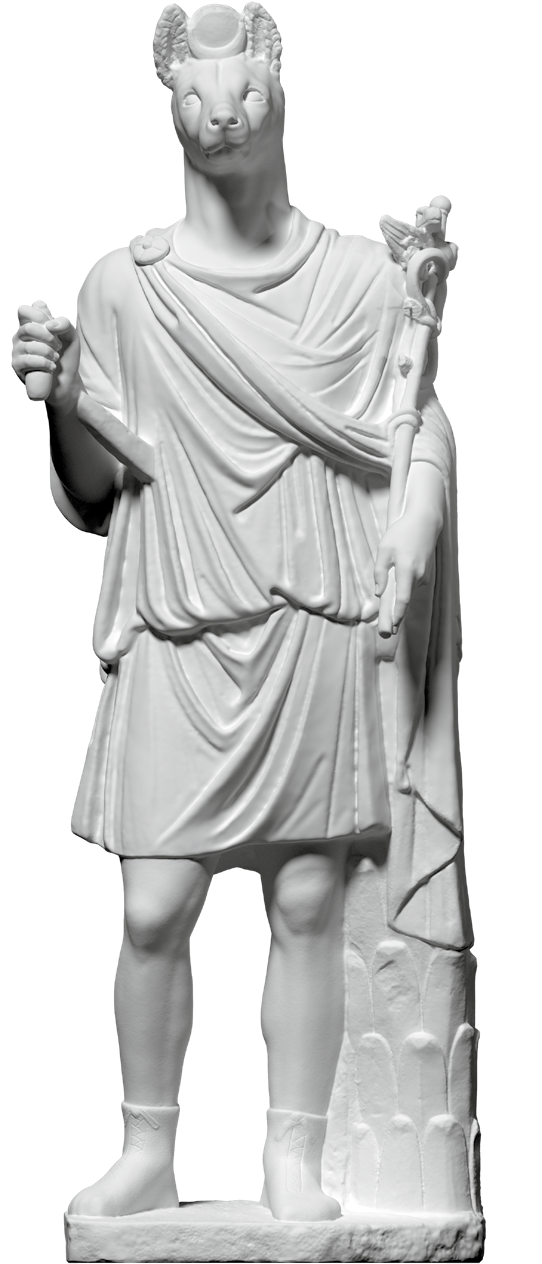
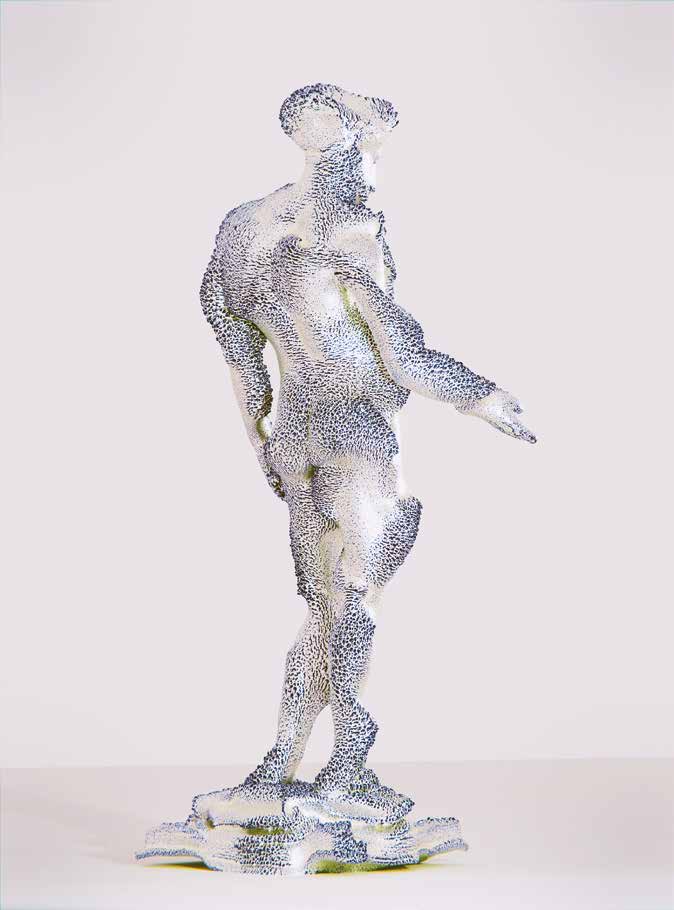
It is not so easy to describe the essence of the artistic “product” of Oliver Laric, or how his artistic working approach might be defined. What is clear, however, is that many of his exhibited works—shown, for instance, at the Secession in Vienna (2016) or at the Schinkel Pavillon in Berlin (2017)—were made using a 3D printing method and are based on 3D scans made by the artist. Yet for Laric, the presentation of sculptures is only one facet of his artistic activity, which also includes various levels of research, publication, and distribution. In many cases, his 3D scans provide a foundation for the cultural products of others who access his data. So he seems to be an artist who functions as a mediator of material for other cultural producers.
Finding, Selecting, Recording – It was in the town of Lincoln in England, once occupied by Romans, that Oliver Laric first had the opportunity to scan a series of three-dimensional works. And it was there, in the year 2012, that he first started to compile a freely accessible digital 3D archive of sculptures and other spatial bodies. The curator of the Usher Gallery in Lincoln, Ashley Gallant, invited the Austrian artist to conceptualize a project for the Annual Award for Museums of the Contemporary Art Society, which was ultimately brought to fruition in cooperation with The Collection and its archaeological finds in Lincoln. With the 3D scanner, Laric captured numerous sculptures, reliefs, and other pieces within the The Collection and then published the compiled data on the website www.lincoln3dscans.co.uk. The spectrum of objects spans from the Roman and Anglo-Saxon epoch to Nigerian art and also includes artwork from the nineteenth and twentieth centuries. Following on the heels of this much-noticed project were requests to other collections and sculpture galleries by the artist to digitalize more works of art so they may become widely accessible. Laric’s website, www.threedscans.com, has meanwhile become a comprehensive archive for 3D scans. For the exhibition at the Secession, he worked with three other Vienna-based institutions: the Albertina, the Department of Classical Archaeology at the University of Vienna, and the Kunsthistorisches Museum (Museum of Art History). All of the above made works available to Laric for his unique project. However, such openness toward the digital world and its demands was not shown by all institutions. For example, the Museum of Fine Arts Leipzig sent a negative reply to Laric’s request to scan Max Klinger’s “Beethoven” (1902). But the artist viewed this rejection as a precedent case on the possibility of digitally multiplying art. Therefore, in the catalogue of his exhibition “Photoplastik” at the Secession, we find a text on copyright law by a lawyer specialized in Internet-related questions.¹ The debate on copyright issues currently circulating virulently online of course also pertains to Laric’s working approach and his form of appropriation, whereby the authors of the works that he scans and makes available are usually already deceased. However, the publication of the legal statement underscores the seriousness of Laric’s intention of demystification. Yet interestingly enough, a whole series of 3D scans that he created are themselves already copies of ancient sculptures. Moreover, Oliver Laric was not deterred by the negative reply from making a synthetic resin copy of the Beethoven sculpture in Leipzig all the same. The production method was, however, much more arduous than usual. A fellow photographer took 300 pictures of this artwork. Then, the photographs were assembled in such a way that Laric could create a 3D print titled “Max Klinger: Beethoven, 1902” (2016). At a height of 2.66 meters, it ultimately became one of his largest format works.
Oliver Laric, in his work, is not actually concerned with art about art. The scans that he offers on his website www.threedscans.com are not all based on works of art. Found in his collection are also direct casts of living creatures, such as a series of sea animals, but also life masks of famous personalities like Johann Wolfgang von Goethe. One of the most bizarre objects, the left foot of the popular Austrian ballerina Fanny Elßler from the year 1847, is reminiscent of the personality cult at Madame Tussauds.
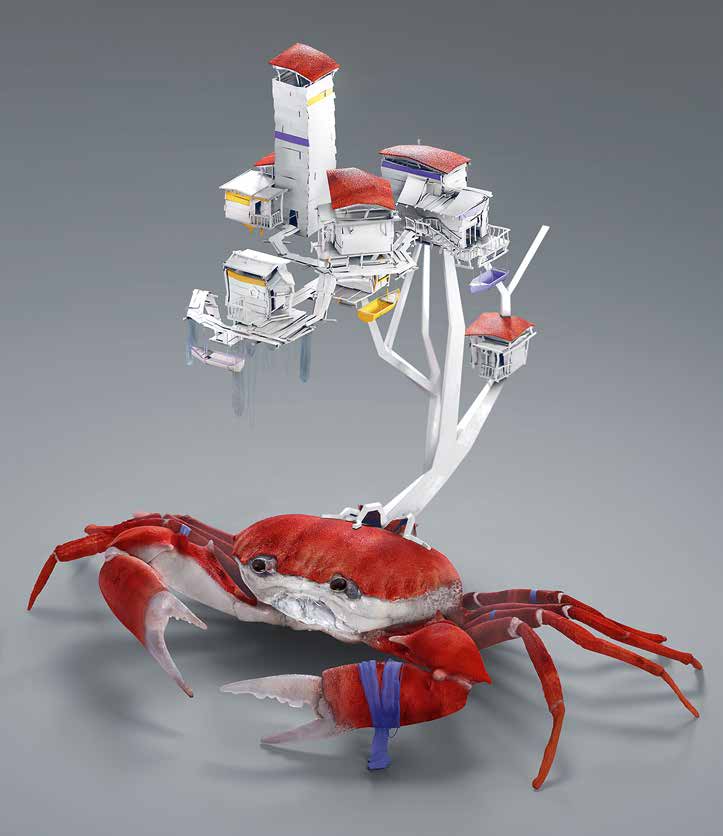
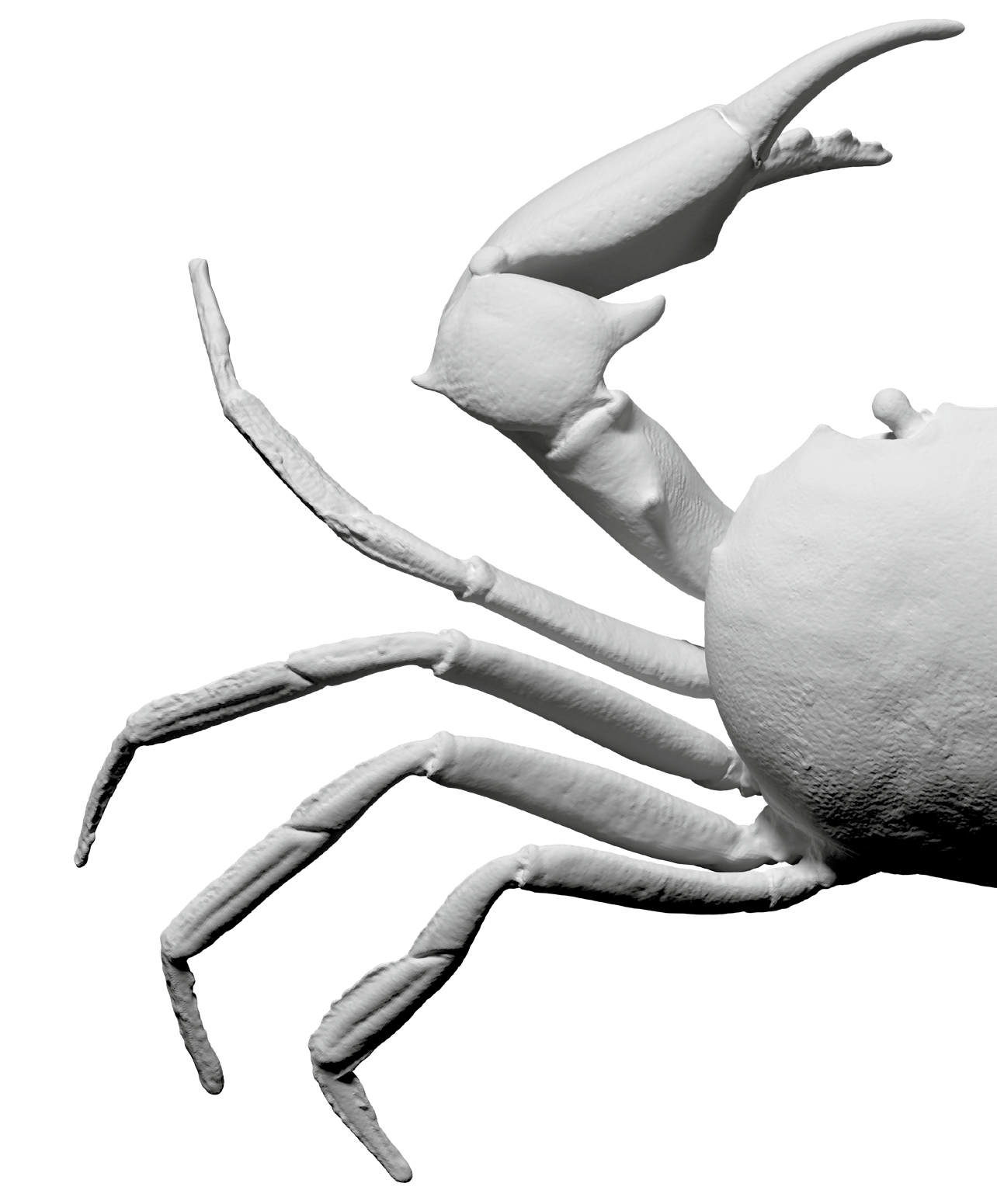
Sharing, Gifting, Researching – For the dissemination of his 3D scans, Oliver Laric does not limit himself only to his own website. Instead, he also avails himself of commercial providers. Entirely in the spirit of the early net activists, he strives for a public dissemination of data that is free of charge and as broad as possible. For example, his 3D scans are found on TurboSquid, an online platform that claims to possess “the world’s best collection” of 3D models. By offering his complex scans for free here, Laric is subverting the existing 3D scan business on the one hand, while enjoying strong success with his scans and stealing his way into various pop-cultural realms with his motifs on the other. His scan of the neoclassicist figure “Nymph Preparing for the Bath” by John Gibson from the nineteenth century, for instance, has already been downloaded almost half a million times. The piece “Hunter and Dog” (1838) is by the same English sculptor. The latter scan was used as part of the background animation for “Grande Amore” by the Italian operatic pop trio Il Volo that represented Italy in the Eurovision Song Contest 2015. But this scan also appears—in moving, rotating form—in the hip-hop music clip “MotorSport” by Migos, Nicki Minaj, and Cardi B. And the makers of the Netflix series “Roman Empire” have made use of Laric’s archive numerous times. This is how the artist introduced neoclassicist, almost cobwebbed sculptures to pop culture—a transformation that has seldom seen such marked success.

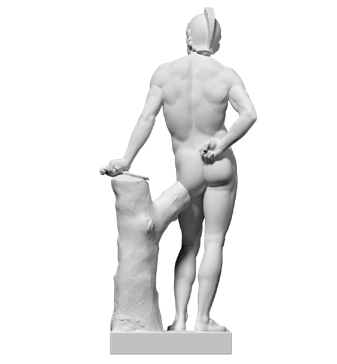

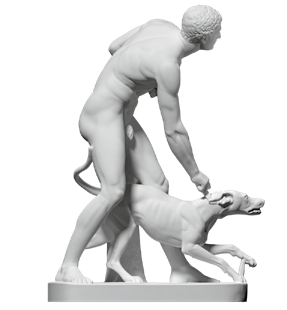

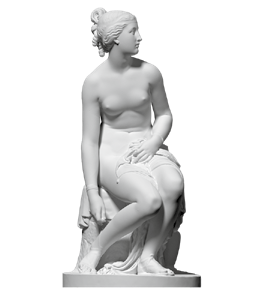
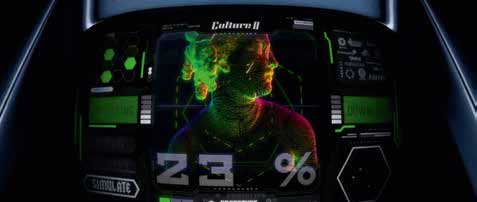


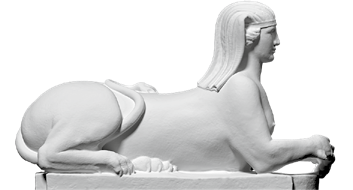

His artistic activity not least involves tracing how his 3D scans have been employed, in cases where he has not been informed by the users themselves. On his website www.threedscans.com, one finds information and visual links to the use of many of his scanned sculptures. Often it is designers and agencies that engage in more or less commercial use of the data. On the whole, this compiling of information yields a multilayered cultural-sociological rendering of today’s treatment of 3D visual data. In the areas of application, the act of multiplying again takes on the character of individualization, of the subjective use of the scans. Laric thus makes visible a certain sector of the Internet economy based on offering to users objects and goods that are modifiable for individual use. Yet these economic concepts and operations are in no way the focus of Oliver Laric’s interest. Instead, he truly seeks a democratization of culture.
1 Paul Klimpel, “Oliver Laric’s work includes a copy of Max Klinger’s Beethoven sculpture made using contemporary technology,” in Oliver Laric: Photoplastik (Vienna: Secession, 2016), pp. 163–65.
In his artistic projects, Oliver Laric (born 1981 in Innsbruck, AT, lives and works in Berlin, DE) brings together his formal and archaeological interests with the technology of 3D scanning and printing. He combines and transfers qualities from the digital domain, such as convenient reproducibility, endless variability, and rapid dissemination into the physical space. Recent and forthcoming solo shows (selection): Saint Louis Art Museum, Missouri (US), S.M.A.K, Ghent (BE, all forthcoming 2019); Tanya Leighton, Berlin, Metro Pictures, New York (US), Braunschweiger Kunstverein (DE, all 2018); Kunsthalle Winterthur (CH), Schinkel Pavillon, Berlin (all 2017); Secession, Vienna (AT), Museum of Contemporary Art, Cleveland, Ohio (US, all 2016); CCA Tel Aviv (IL), Austrian Cultural Forum, London (GB, all 2015); ar/ge kunst Galerie Museum, Bolzano (IT), The Collection and Usher Gallery, Lincoln (UK), Entrée, Bergen (NO, all 2014).
Justin Hoffmann is a curator, musician (F. S. K.), and art historian. Since 2004 he has been the director of the Kunstverein Wolfsburg (DE). Publications include: Next Level: Die Lust am Spiel in der Netzwerkgesellschaft (2007, editor), Das Phantom sucht seinen Mörder: Ein Reader zur Kulturalisierung der Ökonomie (1999, editor), and Destruktionskunst (1995).